
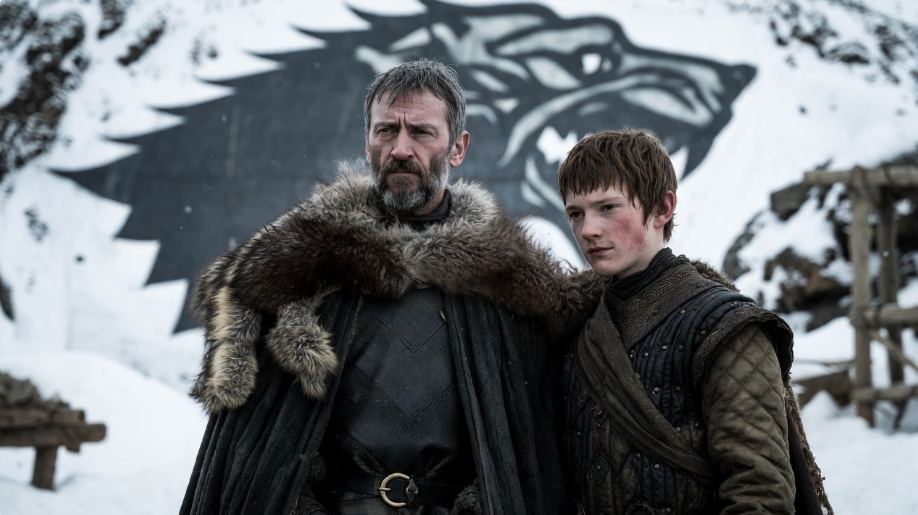
In the frozen halls of Castle Black, as life ebbed from the body of Jeor Mormont—the grizzled 997th Lord Commander of the Night’s Watch—he uttered one final, poignant wish to Samwell Tarly: “Tell my son. Jorah. Tell him, take the black. My wish. Dying wish.” These words, spoken amid betrayal and blood in Season 3’s harrowing mutiny at Craster’s Keep, encapsulate a father’s lingering hope for redemption amid profound disappointment. Jeor Mormont’s son is Jorah Mormont, the exiled knight whose path from heir to disgraced sellsword to devoted protector of Daenerys Targaryen forms one of Game of Thrones‘ most heartbreaking arcs. The father-son story weaves themes of honor, shame, unrequited love, and Northern resilience—reminding us that in Westeros, legacy is forged not just in battle, but in the quiet ruins of personal failure.
For fans puzzled by the connection between the stern Old Bear at the Wall and the bearded advisor shadowing the Mother of Dragons, this deep dive clarifies their bond while exploring the ripple effects on House Mormont. From Bear Island’s rugged shores to the sands of Essos, their tale highlights why “Here We Stand” endures as the house motto despite scandal and loss.
Who Was Jeor Mormont? The Old Bear of the Night’s Watch
Jeor Mormont, affectionately called the Old Bear, embodied the stoic, unyielding spirit of the North. As Lord of Bear Island before his voluntary exile to the Wall, he ruled a modest but fiercely independent house sworn to House Stark. House Mormont’s sigil—a black bear rampant on a green field—and words “Here We Stand” reflect their tenacious hold on a harsh, forested isle far from Winterfell’s grandeur.
Early Life and Rise to Lordship of Bear Island
Born into an ancient but minor Northern house, Jeor inherited leadership during turbulent times. Bear Island’s lords had long defended against ironborn raids and wildling incursions, fostering a culture of practical honor over ostentatious wealth. Jeor raised his only son, Jorah, instilling values of duty, bravery, and loyalty—qualities that would both define and doom the young heir.
Abdicating for His Son – A Rare Act of Northern Generosity
Unlike many lords who clung to power until death, Jeor made a selfless choice: he joined the Night’s Watch voluntarily, likely in the years before Robert’s Rebellion (around the late 270s AC), to allow Jorah to assume lordship early. This act was uncommon in Westeros, where fathers typically retained titles until old age or battle claimed them. Jeor passed on the family’s ancestral Valyrian steel sword, Longclaw, symbolizing trust in his son’s future stewardship.
Leadership as 997th Lord Commander
At the Wall, Jeor rose swiftly through the ranks, elected Lord Commander in 288 AC. He reformed a demoralized Night’s Watch, emphasizing discipline, ranging beyond the Wall, and alliances with Northern houses. His relationship with Jon Snow was paternal—he mentored the bastard, saw potential in him, and famously gifted Longclaw to Jon after Jorah’s disgrace left the blade behind.
Jeor’s tenure ended tragically in Season 3, Episode 4 (“And Now His Watch Is Ended”), when mutineers led by Karl Tanner stabbed him at Craster’s Keep. His death underscored the Watch’s fragility and echoed the personal betrayals that haunted his family.
Key Show Moments and Death
Jeor’s arc highlighted contrasts: a man of iron honor surrounded by compromise. His final moments, urging Sam to deliver his message to Jorah, reveal unresolved paternal love beneath layers of disappointment.

Who Is Jorah Mormont? From Heir to Exile
Jorah Mormont began as everything a Northern lord should be: a skilled warrior, loyal bannerman, and promising ruler. Yet love and desperation unraveled it all.
Jorah’s Youth, Marriages, and Early Honors
Arranged by Jeor, Jorah’s first marriage to a Glover woman lasted a decade but produced no living children—three miscarriages ended in her death. Jorah fought heroically in Robert’s Rebellion (at the Trident) and the Greyjoy Rebellion (Siege of Pyke), earning knighthood from Robert Baratheon himself—an Andal honor that earned him the nickname “Jorah the Andal” among Northerners.
The Fatal Love for Lynesse Hightower
At the Lannisport tourney celebrating the end of the Greyjoy Rebellion, Jorah met and won the hand of Lynesse Hightower, a Reach beauty accustomed to luxury. Their lavish wedding bankrupted Bear Island. To sustain her tastes, Jorah resorted to the ultimate taboo: selling captured poachers into slavery. When Eddard Stark learned of the crime, Jorah fled to Essos rather than face execution, abandoning his titles, home, and ancestral sword.
Lynesse soon left him for a Lysene merchant prince, leaving Jorah broken and adrift.
Exile and Path to Daenerys
In the Free Cities, Jorah became a sellsword, eventually spying for Varys on the Targaryen exiles. Meeting Daenerys in Pentos (Season 1), he initially reported on her but soon fell genuinely in love, abandoning espionage for true loyalty. His arc became one of redemption: protecting her through betrayals, battles, and her rise to power.
Key Traits and Arc in the Show
Jorah’s unrequited love for Daenerys defined him—poignant, tragic, and often criticized as “friendzone” territory. Contracted greyscale in Season 5 while rescuing Tyrion, he fought on, cured by Samwell Tarly’s experimental treatment. He died heroically in Season 8, defending Daenerys during the Battle of Winterfell’s wight assault, dying in her arms—a bittersweet end to his quest for forgiveness.
(Suggested placement: Image of Iain Glen as Jorah in armor beside Daenerys; another of the greyscale arm scene for visual impact.)

The Father-Son Relationship – Honor, Shame, and Unresolved Regret
The bond between Jeor and Jorah is defined by absence and unspoken pain. Jeor sacrificed his lordship for Jorah’s benefit; Jorah repaid it with disgrace.
Jeor’s Pride Turned to Disappointment
Jeor raised Jorah on Northern ideals—honor above all. The slavery scandal shattered that pride, tarnishing House Mormont’s name across the North.
The Symbolic Longclaw Handover
Jorah left Longclaw behind in his flight; Maege returned it to Jeor at the Wall. Jeor’s gifting of it to Jon Snow symbolized a transfer of legacy—Jorah had forfeited his claim through dishonor.
Emotional Distance and Missed Reconciliation
Father and son never reunited on screen or page. Jeor’s dying wish for Jorah to “take the black” shows lingering care—a hope his son could reclaim honor in exile’s brotherhood.
Themes Explored – “The Things We Love Destroy Us”
Jeor’s famous line to Jon—”The things we love destroy us every time”—mirrors both men’s downfalls: Jeor’s love for his son led to abdication and heartbreak; Jorah’s loves (Lynesse, then Daenerys) led to ruin and sacrifice.
George R.R. Martin’s writing uses them to probe legacy: how fathers’ choices burden sons, and how shame can echo through generations.

House Mormont’s Broader Legacy Beyond Father and Son
Despite Jorah’s fall, House Mormont endured through its women.

The Women of Bear Island – Maege, Dacey, Lyanna
Jeor’s sister Maege became Lady of Bear Island after Jorah’s exile. Her daughters—Dacey (killed at the Red Wedding), Alysane, Lyra, Jorelle, and the fierce young Lyanna—embodied “Here We Stand.” Lyanna’s defiance (“I don’t fight in tournaments; I fight for my home”) in Seasons 6-8 reclaimed the house’s honor.
How Jorah’s Actions Impacted the House
Exile brought shame, but the women’s loyalty to the Starks restored prestige. Lyanna’s leadership during the wars proved Bear Island’s resilience.
Book vs. Show Differences
Books portray Jorah as older, balder, and more possessive—less sympathetic than Iain Glen’s portrayal. No greyscale for book Jorah; his arc continues in A Dance with Dragons with deeper internal conflict. Jeor’s backstory aligns closely, but books detail marriages and timelines more richly.

Why the Jeor-Jorah Story Resonates with Game of Thrones Fans
In a series full of fractured families (Tywin-Tyrion, Ned-Robb), Jeor and Jorah stand out for quiet tragedy. It explores redemption’s cost, Northern stoicism, and love’s destructive power. Fans connect because it humanizes larger-than-life figures—reminding us even honorable houses bear scars.
Conclusion
Jeor Mormont’s son, Jorah, represents tragedy redeemed through loyalty and sacrifice. From a promising lord to an exiled knight seeking absolution, Jorah’s journey mirrors his father’s: both chose paths of duty that led to isolation. Yet House Mormont stands—through Lyanna’s fire, Jeor’s honor, and Jorah’s final stand.
Their story asks: Can shame be outrun? Can love redeem? In Game of Thrones, the answer is complex, but “Here We Stand” endures.
What do you think—did Jorah earn redemption? Share in the comments, and explore more on House Mormont, Daenerys’ inner circle, or Northern houses.
FAQs
Who is Jeor Mormont’s son in Game of Thrones? Ser Jorah Mormont, exiled former Lord of Bear Island.
Why did Jeor join the Night’s Watch? To voluntarily pass lordship to Jorah, a rare selfless act.
What happened to Jorah after his exile? He became a sellsword in Essos, spied then loyally served Daenerys, contracted greyscale, and died heroically.
Did Jorah and Jeor ever reconcile? No—they never met again after Jorah’s flight; Jeor’s dying wish was for him to join the Watch.
What is Longclaw’s significance to the family? The ancestral Valyrian steel sword Jorah left behind; Jeor gave it to Jon Snow.
How is Lyanna Mormont related to Jorah? She’s his cousin—daughter of Maege Mormont, Jeor’s sister.
Book vs. show: Any major differences in their story? Show Jorah is more sympathetic and gets greyscale; books portray him as older and more jealous, with no greyscale.
Why is Jorah called “Jorah the Andal”? For receiving knighthood from Robert Baratheon, an “Andal” custom unusual in the North.


