
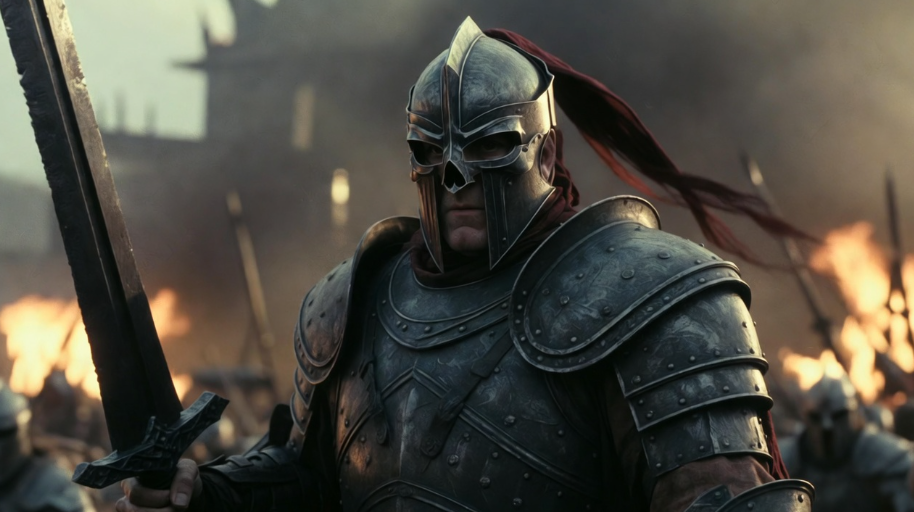
Imagine a man so enormous and vicious that his very presence on the battlefield could break enemy lines before a single sword was drawn. Picture a knight whose greatsword, meant for two hands, he wields effortlessly with one, cleaving armored foes in half with a single swing. This is no myth or exaggeration—this is the Mountain character in Game of Thrones, Ser Gregor Clegane, a towering figure of terror whose name alone evokes dread across Westeros.
The Mountain, or “the Mountain That Rides,” stands as one of the most infamous and feared characters in the entire series. As the older brother of Sandor “The Hound” Clegane and a loyal enforcer for House Lannister, Gregor embodies unchecked brutality, raw physical dominance, and moral depravity. From his early atrocities during Robert’s Rebellion to his resurrection as an undead monstrosity, his story arc is a chilling exploration of violence, loyalty, and the cost of power in George R.R. Martin’s world.
Whether you’re rewatching the HBO series, diving into A Song of Ice and Fire books, or simply curious about why fans still debate his legacy years after the finale, this comprehensive guide breaks down everything you need to know. We’ll explore his origins, unmatched strength, most shocking crimes, key battles, transformation into Robert Strong, and enduring impact—drawing from both the TV adaptation (our primary focus) and book differences for deeper insight.
Who Is the Mountain? Gregor Clegane’s Identity and Origins
The Man Behind the Moniker – Ser Gregor Clegane of House Clegane
Gregor Clegane is the head of House Clegane, a minor landed knightly house sworn to House Lannister in the Westerlands. Unlike greater lords, the Cleganes hold Clegane’s Keep, a modest stronghold granted for loyal service. Gregor serves as Tywin Lannister’s most reliable—and terrifying—tool, often called “Lord Tywin’s mad dog” for his willingness to commit any act without remorse.
His most defining relationship is with his younger brother, Sandor. As children, Gregor’s cruelty was already evident: when Sandor played with one of Gregor’s toys, the older brother responded by pressing Sandor’s face into a brazier, leaving permanent burn scars and fueling a lifelong hatred. This incident shaped Sandor’s fear of fire and his eventual rejection of knighthood’s hypocrisy.
Why “The Mountain That Rides”? Physical Description and Reputation
Gregor’s nickname stems from his freakish size. In the books, he stands nearly eight feet tall (closer to 7’10″–8′), with massive shoulders, arms like tree trunks, and a weight exceeding 420 pounds (190 kg) of almost pure muscle. His voice is described as “stone breaking,” and his face—broad, cold-eyed, and framed by a thick black beard—appears carved from rock.
In the HBO series, his height is portrayed around seven feet, but the intimidation remains intact. He wears the heaviest plate armor in the Seven Kingdoms, dull grey and battle-scarred, so thick that ordinary men couldn’t move in it. Beneath it, chainmail and boiled leather add layers. His helm features a narrow vision slit and a stone fist crest, completing the image of an unstoppable force.
His soldiers, the Mountain’s men, call him simply “Ser,” but his reputation precedes him: a warrior who rapes, murders, and destroys without hesitation, embodying Lannister terror tactics.

The Mountain’s Terrifying Power and Combat Prowess
Unmatched Strength – Feats That Defy Belief
Gregor’s strength is near-mythical. He wields a six-foot two-handed greatsword one-handed, granting massive reach while holding a shield rimmed in black iron bearing House Clegane’s three black dogs on yellow. He has cleaved men in two with single blows, crushed skulls bare-handed, and unhorsed opponents effortlessly.
In tourneys and battles, his power overwhelms skill. Jaime Lannister reflects that Gregor’s strength is “like nothing human,” placing him above even Sandor in raw force. His size allows him to endure wounds that would fell lesser men, and his armor turns him into a walking fortress.
Brutal Fighting Style – Why No One Wanted to Face Him
Unlike agile fighters like Oberyn Martell or skilled swordsmen like Jaime, Gregor relies on brute force and rage. He charges like a battering ram, using momentum and overwhelming power rather than finesse. This berserker approach makes him devastating in open combat but potentially vulnerable to speed and precision—though few dare test it.
Actor Portrayals – How the Mountain Evolved Visually
The role saw multiple recasts: Conan Stevens (Season 1), Ian Whyte (Season 2), and Hafþór Júlíus Björnsson (Seasons 4–8). Björnsson, a former World’s Strongman competitor standing 6’9″ (205 cm) and weighing over 400 pounds at his peak, brought authentic physicality. His real-world feats—like deadlifting nearly 1,100 pounds—mirrored Gregor’s feats, making the character’s dominance feel believable.
(Note: In the show, Björnsson’s imposing build elevated scenes like the trial by combat, where his size contrasted sharply with Pedro Pascal’s agile Oberyn.)
Key Moments and Atrocities – The Brutal Legacy Unpacked
The Sack of King’s Landing and the Murder of Elia Martell
Gregor’s darkest act occurred during Robert’s Rebellion. After the Lannisters betrayed the Targaryens and sacked King’s Landing, Gregor raped and murdered Princess Elia Martell, then dashed her infant children’s heads against walls—all on Tywin’s orders. This crime fueled Oberyn Martell’s lifelong quest for vengeance and deepened Dorne’s hatred of the Lannisters.
Though never formally punished (thanks to Lannister protection), the atrocity defines his legacy as a war criminal.
Early Seasons – From Tournament Rage to Riverlands Terror
In Season 1, Gregor nearly kills his own squire in a fit of rage during the Hand’s Tournament and attacks Beric Dondarrion’s men, earning outlaw status from Ned Stark. Under Tywin’s command, he leads brutal raids in the Riverlands, burning villages and slaughtering innocents to terrorize Robb Stark’s allies.
The Trial by Combat: Oberyn vs. The Mountain (Season 4 Peak)
One of the series’ most iconic and shocking scenes: Oberyn Martell champions Tyrion Lannister in trial by combat, seeking justice for Elia. Oberyn, armed with a poisoned spear, dances around Gregor, wounding him repeatedly and demanding a confession: “You raped her! You murdered her! You killed her children!”
Oberyn’s hubris proves fatal—he gets too close for the kill, and Gregor grabs him, gouges out his eyes, and crushes his skull with bare hands, screaming the confession as he dies. The scene is a masterclass in tension, gore, and tragedy, highlighting Gregor’s monstrous endurance even as poison courses through him.

Death by Poison and Qyburn’s Dark Experiments
After the brutal trial by combat, Gregor succumbs to Oberyn’s manticore venom—a slow, agonizing poison that causes his wounds to fester and his body to swell grotesquely. The Mountain dies in excruciating pain, his massive frame finally succumbing to something no sword could defeat.
But death is not the end for Gregor Clegane. Qyburn, the disgraced former maester with a fascination for forbidden arts and necromancy, is given custody of the body by Cersei Lannister. In the Red Keep’s dungeons, Qyburn performs unspeakable experiments—removing organs, draining fluids, and using dark magic or alchemical knowledge to reanimate the corpse. The result is no longer quite human: a silent, hulking enforcer who no longer feels pain, eats, drinks, or speaks.
The Silent Monster – Differences in the Show vs. Books
In the HBO series, the resurrected figure is openly referred to as Gregor Clegane (or simply “the Mountain”) in most contexts, though Qyburn initially introduces him as Ser Robert Strong to the Kingsguard in Season 5. He wears full plate armor and a great helm that conceals his face entirely, moves with unnatural stiffness, and displays superhuman durability—taking wounds that would kill any living man and continuing to fight.
The books present a more mysterious and grotesque picture. Ser Robert Strong is explicitly named, and his face is never seen (he wears a helm at all times). Rumors swirl that Qyburn used parts from multiple bodies or even that the head sent to Dorne was not Gregor’s. Some theories suggest greyscale infection or that Strong is a patchwork abomination, making him even more monstrous than the living Gregor. In both versions, he serves as Cersei’s ultimate weapon: loyal, unstoppable, and devoid of humanity.

Role as Cersei’s Bodyguard and Enforcer
As Robert Strong, Gregor becomes Cersei’s personal champion and Kingsguard member. He stands silent guard during her walk of atonement, intimidates the Small Council, and crushes opposition without hesitation. His presence alone terrifies enemies—reminding everyone that the Lannisters still command monsters capable of unimaginable violence.
The Clegane Brothers – Rivalry, Trauma, and Cleganebowl
The Hound and the Mountain – A Lifelong Feud
The deepest scar in Gregor’s legacy isn’t physical—it’s the psychological damage he inflicted on his brother Sandor. The childhood incident where Gregor shoved Sandor’s face into hot coals for playing with a toy created a permanent fear of fire in Sandor and turned him into “the Hound,” a man who rejected knighthood’s ideals while serving under Lannister colors.
Their paths diverged dramatically: Sandor grows disillusioned with violence, deserts the Battle of the Blackwater, and eventually finds a glimmer of redemption protecting Arya Stark and later fighting for the living. Gregor, meanwhile, remains Tywin’s (and later Cersei’s) loyal instrument of terror, never showing remorse or change.

Cleganebowl – The Epic Final Confrontation (Season 8)
Fans had speculated for years about “Cleganebowl”—a climactic brother-vs-brother duel. In Season 8, Episode 5 (“The Bells”), it finally happens amid the destruction of King’s Landing.
Sandor confronts the undead Mountain in the Red Keep’s stairwell. Gregor, now a silent juggernaut, initially overpowers his brother with sheer strength. But Sandor, fueled by rage and a desire for closure, fights back ferociously. He stabs Gregor repeatedly, even driving a dagger into his eyes through the helm slits—yet the undead warrior keeps coming.
In a final, desperate move, Sandor tackles Gregor through a window, sending both plummeting into the burning city below. As flames engulf them, Sandor whispers, “Goodbye, brother,” embracing the fire he once feared to end the cycle of hatred. The scene provides cathartic closure: the Hound’s redemption arc culminates in destroying the monster who shaped him, while Gregor’s monstrous existence ends in fire.

The Mountain’s Legacy in Game of Thrones and Beyond
Symbol of Lannister Cruelty and Power
Gregor Clegane personifies Tywin Lannister’s philosophy: “When your enemies go to their knees and say ‘please,’ you might show mercy… but the Mountain never did.” His atrocities—rape, murder, child-killing—cement the Lannisters’ reputation for ruthless terror. Even after his death, his legacy haunts Dorne, the Riverlands, and the smallfolk who suffered under his raids.
Thematically, he represents the dark side of knighthood: a “ser” who commits war crimes while wearing armor, exposing the hypocrisy of Westerosi honor.
Fan Theories and Book Future Speculation
In the books (up to A Dance with Dragons), Robert Strong’s true nature remains ambiguous. Theories abound: he could be a greyscale-infected Gregor, a Frankenstein-like composite, or even controlled by some form of warging or blood magic. Many fans expect a future “Cleganebowl” in The Winds of Winter or A Dream of Spring, possibly with Sandor (as the gravedigger on the Quiet Isle) facing his undead brother in a trial by combat or during the fight against Cersei.
His enduring appeal lies in his sheer monstrosity—he’s not a complex villain like Tywin or Littlefinger, but a force of nature, a walking nightmare that forces characters (and readers) to confront raw evil.
Real-World Impact – Actor Legacy and Cultural Icon
Hafþór Júlíus Björnsson’s portrayal elevated the character. His background as a four-time World’s Strongest Man winner (including deadlifting 1,104+ pounds) lent credibility to Gregor’s feats. Björnsson’s physical transformation for the role—bulking to over 400 pounds—mirrored the character’s larger-than-life presence, turning the Mountain into a pop-culture icon of brute strength.
FAQs About the Mountain Character
Is the Mountain dead in Game of Thrones? Yes—twice. He dies from poison after the trial by combat, then is reanimated as an undead servant. He finally perishes in the fire during Cleganebowl.
How tall is the Mountain in the show vs. books? In the books, Gregor is nearly 8 feet tall and weighs around 420 pounds (190 kg). The show portrays him at about 7 feet (Hafþór Björnsson is 6’9″), but his bulk and armor make him appear even larger.
Who played the Mountain across the seasons? Conan Stevens (Season 1), Ian Whyte (Season 2), and Hafþór Júlíus Björnsson (Seasons 4–8).
Why is Gregor Clegane so brutal? His cruelty seems innate—evident from childhood. He serves as Tywin’s enforcer, committing atrocities to instill fear and maintain Lannister dominance.
What are the main differences between Gregor Clegane and Robert Strong in the books? The books keep his identity more secretive (no face shown, rumors of patchwork body), while the show treats him as a clearly reanimated Gregor with less mystery.
Did the Mountain have any redeeming qualities? None shown. Unlike Sandor, who evolves, Gregor remains a remorseless killer throughout.
What happened to the Mountain’s head? In the show, it’s implied Qyburn kept it or discarded it. In the books, a head is sent to Dorne (possibly not his real one).
Is Cleganebowl happening in the books? It’s a popular fan theory, but unconfirmed. Many expect a confrontation involving the gravedigger (possibly Sandor) and Robert Strong.
Conclusion
From a sadistic knight who burned his brother’s face to an undead abomination guarding Cersei Lannister, the Mountain character in Game of Thrones traces a path of pure destruction. Gregor Clegane’s brutal legacy endures not because he was clever or charismatic, but because he represented the worst of Westeros: power without conscience, strength without mercy.
His story forces us to confront uncomfortable truths about violence, loyalty, and monstrosity. While Sandor found a path toward redemption, Gregor remained a monster to the end—until fire finally consumed him.


