
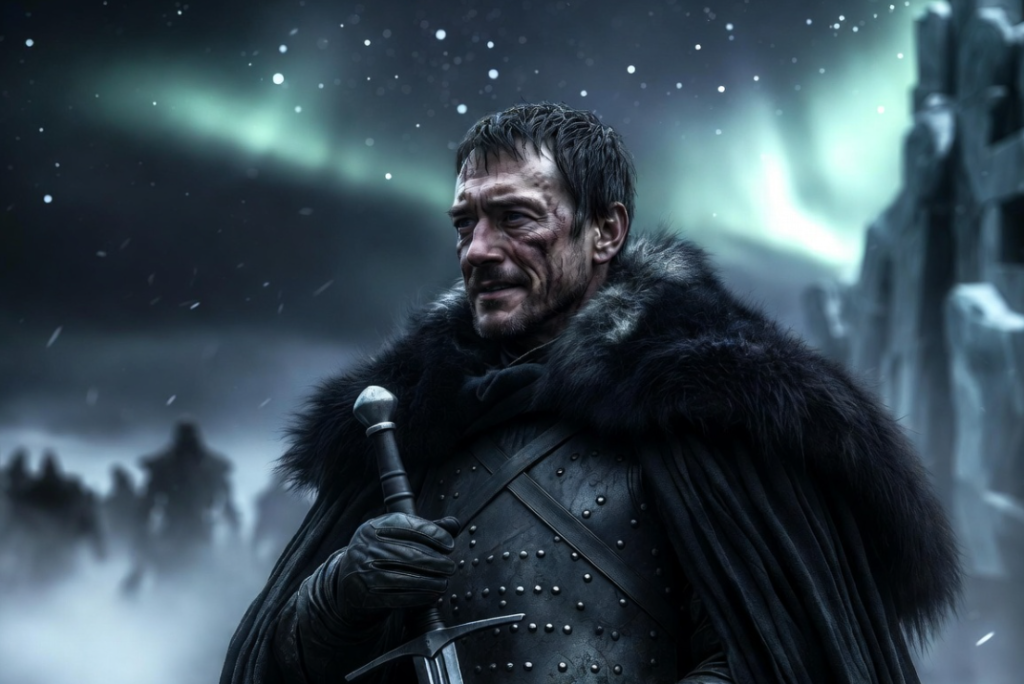
In the grim, unforgiving world of Game of Thrones, where kings, queens, and dragons dominate the spotlight, few characters embody quiet resilience and dark humor quite like Eddison Tollett — better known as Dolorous Edd. From his first appearances as a sarcastic steward of the Night’s Watch to his heartbreaking final stand in the Battle of Winterfell, Edd became a fan-favorite for delivering some of the series’ most memorable lines while surviving horrors that claimed countless others.
If you’ve ever wondered about the full story behind this pessimistic yet fiercely loyal brother of the Watch — his origins, unbreakable bond with Jon Snow, rise to leadership, iconic quotes, and ultimate sacrifice — you’re in the right place. This comprehensive guide dives deep into Eddison Tollett’s journey, blending show canon with book insights for a complete picture that goes beyond surface-level recaps.
Whether you’re rewatching the HBO series, mourning his loss years later, or seeking context for why “Dolorous Edd” still resonates with fans, this article delivers the definitive breakdown. Spoilers ahead for the entire Game of Thrones TV series (and light book comparisons from George R.R. Martin’s A Song of Ice and Fire).
Who Is Eddison Tollett? Background and Origins
Eddison Tollett, commonly called Dolorous Edd for his relentlessly gloomy yet hilarious outlook on life, is a steward of the Night’s Watch and one of its most enduring members. He hails from a distant, lesser branch of House Tollett, an ancient noble house from the Vale of Arryn. Despite his noble blood, Edd grew up in poverty, living in conditions little better than the smallfolk — a detail that adds poignant irony to his service on the Wall.
He joined the Night’s Watch at the young age of fifteen. In the books, Yoren recruits him with a classic bit of deception, promising that women cannot resist a man in uniform — conveniently omitting the celibacy vow. This humorous recruitment story perfectly sets up Edd’s worldview: life is full of disappointments, and even the promises that sound good usually come with hidden catches.
Early Life and House Tollett
House Tollett holds a minor lordship in the Vale, but Edd is many generations removed from any real power or wealth. He often references his humble (and miserable) upbringing, once telling Jon Snow that he was “born in a house much like this” while surveying a crude wildling dwelling. His early life forged the dry, pessimistic humor that would define him. In a world of grand ambitions and betrayals, Edd keeps expectations low — and somehow finds dark comedy in every setback.
Joining the Night’s Watch and Earning the Nickname “Dolorous Edd”
Swearing the oath young, Edd quickly earned his nickname through his sarcastic, deadpan delivery. Brothers of the Watch loved (and relied on) his gloom because it often masked profound loyalty and sharp observation. He wasn’t a great warrior like some, but as a steward he proved reliable, competent, and — crucially — someone who could lighten the mood even when doom seemed inevitable.
Edd in the Books vs. the TV Show – Key Differences
The show condenses and adapts many elements for pacing, while the books give Edd more frequent witty asides and internal reflections through Jon’s POV chapters.
Here’s a quick comparison table for clarity:
| Aspect | Books (A Song of Ice and Fire) | TV Show (Game of Thrones) |
|---|---|---|
| Recruitment | Recruited by Yoren with humorous lie about women | Introduced in Season 2 as part of the ranging |
| Personality | Even more verbose sarcasm and complaints | Visual deadpan delivery by Ben Crompton |
| Survival Highlights | Fist of the First Men, Craster’s Keep, more detailed | Hardhome, Battle of the Wall, expanded screen time |
| Leadership Role | Votes in elections; more background interactions | Unofficially named acting Lord Commander by Jon |
| Death Scene | Not yet reached in published books | Sacrifices himself saving Sam in Battle of Winterfell |
The show’s portrayal benefits enormously from actor Ben Crompton’s performance. Crompton brought a perfect balance of weary resignation and underlying warmth that made Edd instantly likable, appearing in 34 episodes from Season 2 through the finale.
This foundational section sets up why Edd matters: in a saga filled with highborn schemers and legendary heroes, a lowborn (by circumstance) steward with no grand destiny becomes one of the most memorable figures through sheer endurance and heart.

Eddison Tollett’s Role in the Night’s Watch: From Steward to Survivor
Edd’s true story begins beyond the Wall, where the Night’s Watch confronts threats far deadlier than wildlings.
The Great Ranging Beyond the Wall (Season 2 / A Clash of Kings – A Storm of Swords)
Assigned as a steward, Edd joins Lord Commander Jeor Mormont’s great ranging. He survives the disastrous Battle of the Fist of the First Men, where White Walkers and wights decimate the force. Along with Samwell Tarly and Grenn, Edd endures the nightmare retreat to Craster’s Keep.
When mutineers murder Mormont, Edd and Grenn are briefly chained but escape with Sam. These early ordeals establish Edd as a survivor who keeps going even when he loudly complains about it.
The Battle of Castle Black and Defense of the Wall
During the wildling assault on the Wall in Season 4, Edd plays a key defensive role. He helps command sections of the battlements and contributes to the desperate hold against Tormund and his forces. His calm (if pessimistic) demeanor under pressure proves valuable when panic threatens to break the brothers.
Hardhome and the Rise of the White Walkers
One of Edd’s most harrowing experiences comes in Season 5’s “Hardhome” episode. He accompanies Jon Snow and Tormund Giantsbane to negotiate with the wildlings. When the Army of the Dead attacks, Edd witnesses the full horror of the White Walkers and their wights up close. He is among the few who make it back alive — having now survived multiple direct encounters with the undead.
These events cement Edd’s reputation as one of the Night’s Watch’s toughest, most reliable members. While others fall to mutiny, wildlings, or cold, Edd keeps returning, always ready with a quip that acknowledges the absurdity of their situation.

Edd’s Unbreakable Bond with Jon Snow and the Inner Circle
What truly elevates Edd beyond a comic-relief side character is his deep, unwavering loyalty — especially to Jon Snow.
Friendship with Jon Snow – Loyalty Through Betrayal and Resurrection
Edd and Jon bond early as fellow stewards and outcasts of sorts. When Jon is elected Lord Commander, Edd stands firmly by his side. After the mutiny at Castle Black in Season 5 — where Alliser Thorne and others stab Jon to death — Edd is one of the few who remains loyal. He helps guard Jon’s body and openly defies the mutineers.
When Melisandre resurrects Jon, Edd’s reaction mixes relief with his signature dry humor. Jon’s first major act upon returning is to execute the traitors, then unofficially name Edd as acting Lord Commander before leaving the Watch to fight with the wildlings and Northern houses.
This moment speaks volumes: Jon trusts Edd more than anyone else to hold the Wall in his absence.
Relationship with Samwell Tarly, Grenn, and Other Brothers
Edd forms a tight-knit group with Sam, Grenn, and Pypar (“Pyp”). They share countless hardships, from ranging missions to the defense of the Wall. Edd’s blunt honesty with Sam — once pointing out they left him behind during a retreat because he was “fat and slow” — is delivered without malice, highlighting the raw camaraderie of the Watch.
Even in darkest times, these friendships provide the emotional core that keeps Edd fighting.
Edd as Jon’s Trusted Lieutenant
Throughout Jon’s tenure, Edd offers honest counsel, often laced with pessimism that doubles as realism. He never flatters or schemes; he simply does his duty and supports his friend. This loyalty makes Edd the quintessential “unsung hero” of the Night’s Watch.
Dolorous Edd’s Rise to Leadership – Acting Lord Commander
After Jon Snow’s resurrection by Melisandre in Season 6, the mutineers who stabbed him are swiftly executed. Jon then makes a pivotal decision: he renounces his vows to the Night’s Watch to fight for the living in the North and hands leadership of Castle Black over to his most trusted friend.
Jon removes his black cloak and gives it to Eddison Tollett, naming him the acting Lord Commander. In many fan discussions and references, Edd is considered the 999th Lord Commander of the Night’s Watch. This moment is quiet but powerful — Jon chooses not a seasoned warrior or political schemer, but the pessimistic steward who has stood by him through every horror beyond the Wall.Gameofthrones.fandom
After Jon’s Departure
With Jon gone to rally the North and eventually declare himself King in the North, Edd assumes command at Castle Black. He faces immense challenges: dwindling numbers of brothers, the growing threat of the White Walkers, and the need to manage wildling refugees who have crossed the Wall.
Edd leads the remaining Night’s Watch with reluctant duty. He helps coordinate the defense and integration efforts, maintaining order in one of the most dangerous times in the Watch’s history. When the Night King eventually breaches the Wall with his undead dragon in Season 7’s finale, Edd and his men are among the last to witness the fall of the ancient barrier.
Leadership Style and Decisions
Edd’s leadership is defined by practicality, dark humor, and unwavering loyalty to the Watch’s original purpose — protecting the realms of men. He doesn’t seek glory or power; he simply does what must be done while complaining about it in his signature style.
One memorable line during this period captures his mindset perfectly: he prepares for the worst while hoping for the best in the bleakest way possible. He rounds up what remains of the brothers, secures Castle Black as best he can, and later leads surviving members south to join Jon at Winterfell for the final battle against the Army of the Dead.
His style contrasts sharply with previous commanders like Jeor Mormont or Alliser Thorne. Edd leads through quiet example and realism rather than charisma or fear. He keeps morale from completely collapsing by voicing the grim truths everyone is thinking, making the unbearable slightly more bearable through laughter.
Book vs. Show Leadership Moments
In George R.R. Martin’s books (A Song of Ice and Fire), Edd receives a few votes in the Lord Commander election but ultimately supports Jon and serves as his steward. He does not become acting commander in the published material (as the story has not reached that point in the same way). The show expands Edd’s role significantly in later seasons, giving him more screen time and responsibility to highlight his growth from background steward to de facto leader. This adaptation choice allows fans to see the full arc of his loyalty and quiet heroism.Awoiaf.westeros
Edd’s tenure as acting Lord Commander, though brief and tragic, underscores a key theme: true leadership often falls to those who never wanted it but prove worthy through steadfast duty.
Iconic Dolorous Edd Quotes – Humor in the Face of Doom
No character in Game of Thrones delivers bleak comedy with more precision than Dolorous Edd. His lines, delivered with perfect deadpan timing by Ben Crompton, provide much-needed levity amid constant death and despair. Here are some of the most memorable quotes, grouped by theme, with context and why they resonate so deeply:
On Death and the Afterlife
- “Whoever dies last, be a good lad and burn the rest of us. Once I’m done with this world, I don’t want to come back.” Spoken during preparations for battle, this line perfectly encapsulates Edd’s pragmatic pessimism. He has seen enough wights to know the horror of undeath and wants no part of it. It became one of his most quoted lines and foreshadowed his own fate.Screenrant
- “If the gods wanted us to have dignity, they wouldn’t make us fart when we died.” A classic example of Edd finding humor in the undignified reality of mortality, shared while reflecting on fallen brothers.
On Survival and Misery
- “We’ll live another day. Hurrah.” Delivered with zero enthusiasm after yet another narrow escape, this captures his signature sarcasm.
- “I had a frightening dream last night, m’lord. You were my steward, fetching my food and cleaning up my leavings. I was lord commander and you were my steward.” (paraphrased from book reflections, adapted in spirit on screen) Edd often dreams of worse fates, highlighting his worldview that things can always get more miserable.
- “Nothing beats a hot cup of horse blood on a cold night. I like mine with a pinch of cinnamon sprinkled on top.” Said during the great ranging, turning a grim necessity into absurd comedy.
On Friendship and Loyalty
- “I don’t care who sits at the high table. Jon was my friend, and those f**kers butchered him.” Edd’s raw anger after Jon’s murder shows the steel beneath the gloom — his loyalty runs deeper than any oath.
- When speaking to Sam about Gilly: “The thing about Gilly that you find so interesting is that she said six words to you.” Gentle ribbing that reveals his observational wit within the inner circle.
On the Absurdity of Their Situation
- “Stupid. Smart people don’t find themselves in places like this.” A self-aware jab at the Night’s Watch’s endless suffering.
- “Bad enough when the dead come walking. Now the Old Bear wants them talking as well? No good will come of that, I’ll warrant.” Referring to communicating with wights or wildlings — Edd always anticipates the worst outcome.
These quotes work because they are not just jokes; they reveal character depth. Edd uses humor as a coping mechanism in a world where hope is dangerous. Fans still share and meme these lines years later because they make the darkness feel survivable. Ben Crompton’s delivery — weary, understated, and perfectly timed — elevated them from page to screen icon status.Ranker
Eddison Tollett’s Final Stand and Heroic Death (Season 8, Episode 3 – “The Long Night”)
As the Army of the Dead marches on Winterfell, Edd leads the last remnants of the Night’s Watch to join the defense. He arrives with Jon and the others, sharing a heartfelt (if brief) reunion hug with his old friend.
The Battle of Winterfell Setup
Edd is positioned on the front lines alongside Samwell Tarly during the initial infantry clash. When Sam appears among the fighters instead of staying in the crypts, Edd sarcastically remarks on it — true to form even in the face of annihilation.
The battle quickly descends into chaos as waves of wights overwhelm the living. Edd fights valiantly, one of the few original brothers still standing after years of ranging, mutinies, and Hardhome.
The Moment of Sacrifice
In the midst of the melee, Sam is knocked down and overwhelmed by a wight. Without hesitation, Edd rushes to save his friend, pulling the creature off Sam and killing it. In that split second of distraction, another wight stabs Edd in the back.
He collapses, dying in Sam’s arms. His final moments are quiet and fitting — no grand speech, just the completion of his lifelong duty to protect his brothers. Sam, overcome with grief, can only watch as Edd passes.Gameofthrones.fandom
Edd’s body is later reanimated by the Night King as a wight, joining the horde, only to be destroyed when Arya slays the Night King and the undead army collapses.
Emotional Impact and Aftermath
Edd’s death is one of the most poignant in the episode. It hits hard because he had survived so much — the Fist of the First Men, Craster’s Keep, Hardhome, the Battle of the Wall — only to fall while saving the friend he had teased for years. Many fans felt it was both heroic and tragically understated, perfectly suiting an “unsung hero.”
The scene sparked discussions: some criticized Sam for indirectly causing the death by being on the battlefield, while others saw it as the ultimate expression of Night’s Watch brotherhood. Edd’s sacrifice allows Sam to survive and later contribute to victory in his own way (through knowledge and heart).
His body is burned in the mass funeral pyres after the battle, with Jon and the survivors paying respects. The line “And now his watch has ended” echoes powerfully in fan tributes.
Fan Reactions and Legacy of His Death
Years after the finale, Edd’s death remains a talking point. It encapsulates the show’s theme that no one is truly safe, even beloved side characters. Many rank it among the most emotional deaths because of its simplicity and the long history behind the friendship with Sam and Jon. Ben Crompton’s performance made the moment land with genuine weight, turning a minor steward into a character fans still mourn and celebrate.Winteriscoming
Why Dolorous Edd Remains a Fan Favorite – Character Analysis
Eddison Tollett stands out in Game of Thrones because he represents the everyman in a story of legends. While Daenerys has dragons, Tyrion has wit and schemes, and Jon has destiny, Edd has only sarcasm, loyalty, and an unbreakable will to keep going.
His dark humor serves as a coping mechanism for trauma — a realistic portrayal of how people endure prolonged suffering. In a cast full of high-stakes ambition and betrayal, Edd’s quiet steadfastness feels refreshing and relatable. He never seeks power, revenge, or glory; he simply fulfills his oath and supports his friends.
Expert analysis from long-time viewers and book readers highlights how Edd embodies the ideal of the Night’s Watch: men who take the black not for honor or escape alone, but who grow into true protectors of the realms of men. Actor Ben Crompton brought warmth and humanity to the role, making Edd’s pessimism endearing rather than annoying. His chemistry with Kit Harington (Jon) and John Bradley (Sam) created believable, grounded friendships that anchored many of the Wall’s storylines.Winteriscoming
Compared to other side characters, Edd outshines many in memorability because his humor and heart make him human. He proves that heroism doesn’t always require a sword of destiny or royal blood — sometimes it’s just showing up, complaining loudly, and dying for your friends.
Themes of quiet heroism, found family, and finding light (or at least laughter) in darkness run through his arc. In a series often criticized for grimdark excess, Edd provided balance without undermining the stakes.

Eddison Tollett’s Legacy in Game of Thrones Lore
Edd’s journey leaves a lasting imprint on the lore of the Night’s Watch. As one of the last true stewards who remembered the Watch’s original purpose, he helped bridge the old brotherhood with the new alliances Jon forged with wildlings.
His leadership, however temporary, kept Castle Black functioning during critical times. His sacrifice in the Battle of Winterfell contributed directly to the living’s victory over the dead — without him saving Sam, the scholar who later helps preserve knowledge of the Long Night might have fallen.
Thematically, Edd represents that duty and loyalty can endure even when hope fades. His famous requests to be burned rather than rise as a wight underscore the horror of the undead threat and the dignity the living fight to preserve.
For book readers, Edd remains active in the later novels as Jon’s steward, leaving room for more story. The show gave him a complete, emotional arc that satisfied fans while honoring his book spirit.
Revisiting Edd enhances rewatches: his lines hit harder knowing his full journey, and his presence makes the early seasons’ Wall stories richer. He reminds us that in Westeros, the smallest roles can leave the biggest emotional marks.
Frequently Asked Questions About Eddison Tollett (FAQ)
Who plays Eddison Tollett in Game of Thrones? Ben Crompton portrays Dolorous Edd across 34 episodes, bringing the character’s dry wit to life.
What is Dolorous Edd’s real name? Eddison Tollett, from a minor branch of House Tollett in the Vale.
Did Edd become Lord Commander? Yes, he served as acting Lord Commander after Jon Snow left the Night’s Watch.
How does Dolorous Edd die? He is stabbed in the back by a wight while saving Samwell Tarly during the Battle of Winterfell in Season 8, Episode 3.
What are the best Dolorous Edd quotes? Standouts include “Whoever dies last, be a good lad and burn the rest of us…” and his many deadpan complaints about life on the Wall. (See the dedicated quotes section above for more.)
Is Edd different in the books? The books feature more of his internal sarcasm and asides through Jon’s chapters, but the show expands his later leadership role and gives him a definitive on-screen end. His core personality — gloomy yet loyal — remains consistent.
Why is he called Dolorous Edd? “Dolor” means sorrow or pain; his relentlessly pessimistic (yet funny) outlook earned him the nickname early in his service.
Conclusion
From a young recruit joining the Night’s Watch with misplaced hopes of glory to the acting Lord Commander who led with reluctant heart until his final breath, Eddison Tollett — Dolorous Edd — carved out an unforgettable place in Game of Thrones. Jon Snow’s loyal friend and the Night’s Watch’s unsung hero never sought the spotlight, yet his dark humor, quiet bravery, and steadfast loyalty made him one of the series’ most beloved characters.
In a saga filled with larger-than-life figures, battles for thrones, and mythical creatures, Edd proved that true strength often lies in endurance, friendship, and doing your duty even when the odds are impossible. His journey from pessimistic steward to heroic sacrifice reminds us why the Night’s Watch matters: ordinary men standing against extraordinary darkness.
Years after the show ended, fans still quote Dolorous Edd, share tribute videos, and debate his moments because he felt real. His watch has ended, but his legacy endures — a testament to the power of well-written side characters who steal hearts through authenticity.
What is your favorite Dolorous Edd moment or quote? Share in the comments below, and let us know which Game of Thrones character you’d like to see covered next. If you enjoyed this deep dive, explore our other guides on Jon Snow’s full arc, the history of the Night’s Watch, or Samwell Tarly’s scholarly journey


