
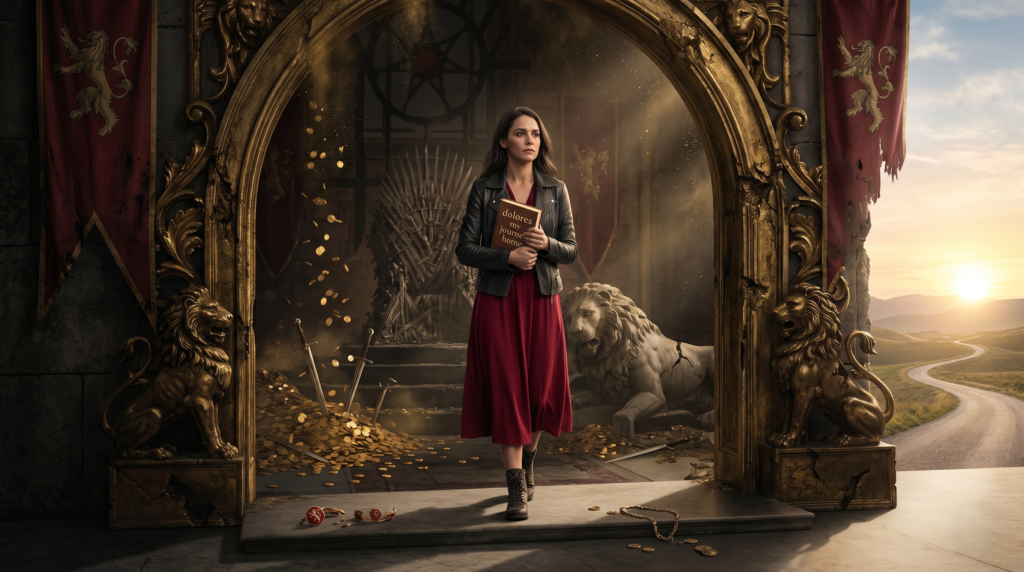
What do a 21st-century digital empire and the most formidable Great House in Westeros have in common? The answer lies in the meticulous construction—and the inevitable, catastrophic collapse—of a flawless public facade. Recently, the highly anticipated memoir dolores my journey home captured public attention, detailing Catherine Paiz’s harrowing escape from the highly publicized, heavily scrutinized ACE Family empire. At first glance, a modern influencer’s tell-all about surviving a very public fallout might seem lightyears away from the gritty, blood-soaked politics of George R.R. Martin’s universe.
However, high fantasy has always served as a profound mirror for reality. By filtering the real-world themes of betrayal, public deception, and breaking free from a toxic dynasty—as vividly detailed in the memoir—through the lens of House Lannister, we can better understand the psychological toll of empire-building. Whether you are navigating the cutthroat landscape of modern internet fame or the treacherous halls of the Red Keep, the courage it takes to walk away from a poisonous legacy remains universally compelling.
In this deep-dive pop culture analysis, we will explore the striking thematic overlaps between escaping a modern toxic empire and the deeply ingrained generational trauma that ultimately brought down the lions of Casterly Rock.
The Illusion of Perfection: Public Empires and Legacy
Every great dynasty, whether built on millions of YouTube subscribers or thousands of armored swords, requires a narrative. To maintain power, both the ACE Family and House Lannister relied on projecting an impenetrable image of wealth, unity, and absolute superiority.
The Weight of the Name and the Performative Facade
In dolores my journey home, readers are given a backstage pass to the exhausting reality of performative perfection. The memoir peels back the glossy, curated layers of a family channel that sold a specific, highly monetized dream to its audience. The brand’s survival depended entirely on the public believing the illusion. The moment the cracks began to show, the entire foundation was threatened.
In Westeros, no family understands the burden of the “brand” quite like House Lannister. Their unofficial motto, “A Lannister always pays his debts,” is less about financial integrity and more about projecting limitless resources and inevitable retribution. Tywin Lannister spent his entire life erasing the weak, laughingstock legacy of his father, Tytos. Tywin built an empire on fear, gold, and a golden facade. The Lannister name had to be respected, feared, and viewed as utterly flawless.
Just as a modern digital empire requires constant content generation to feed the algorithm and maintain relevance, the Lannister legacy required constant, ruthless posturing.
Tywin Lannister’s Obsession with Image
To understand the core of a toxic family dynamic, one must look at its architect. Tywin Lannister’s overarching philosophy was terrifyingly simple: “The House that puts family first will always defeat the House that puts the whims and wishes of its sons and daughters first.”
Tywin viewed his children—Cersei, Jaime, and Tyrion—not as individuals deserving of unconditional love, but as extensions of his own ego and tools for the dynasty’s advancement.
This mirrors the darkest aspects of family vlogging and modern influencer culture, where personal milestones, private struggles, and even children are commodified for public consumption. When your very existence is tied to a public entity, your personal autonomy is erased. The pressure to conform to the empire’s needs creates an inherently toxic environment where love is highly conditional. If a Lannister child (or a modern public figure) steps out of line, they threaten the “business,” and the retribution is swift and merciless.
Expert Insight: The burden of “performative perfection” within narcissistic or deeply entrenched family structures often leads to profound isolation. Individuals within the system learn early on that their value is inextricably linked to their utility to the family image, rather than their intrinsic worth. Breaking this trauma bond requires a monumental shift in identity.

Betrayal From Within: When Trust Becomes a Weapon
An empire built on a facade is inherently fragile. It rarely takes a foreign invading army to bring it down; more often, the collapse begins from the inside out.
Unveiling the Deception
A central theme in Catherine’s journey is the realization that the empire she helped build was standing on a crumbling foundation. The memoir delves into the painful mechanics of financial ruin, broken trust, and emotional sabotage orchestrated behind closed doors. When the people closest to you are prioritizing the “brand” or their own ego over genuine human connection, betrayal becomes an everyday reality. The realization that the wealth and security were an illusion is a devastating blow, one that forces a complete reevaluation of reality.
The Lannister Debt and Internal Warfare
We see this exact dynamic play out in the halls of Casterly Rock and King’s Landing. House Lannister projected infinite wealth, yet beneath the surface, the truth was far more precarious. In the show’s canon, Tywin reveals to Cersei that the gold mines of Casterly Rock ran dry years ago. The Lannisters were surviving on the illusion of wealth, heavily indebted to the Iron Bank of Braavos. They were bankrupt, operating purely on intimidation and brand recognition.
But the true betrayal was emotional. House Lannister’s downfall wasn’t caused by the Starks or the Targaryens; it was caused by their absolute inability to trust one another.
-
Cersei weaponized her father’s toxic ambition, turning her paranoia against her own brothers.
-
Tyrion faced constant sabotage from his own blood, ultimately leading to a betrayal so deep he was forced to murder the architect of his pain (Tywin).
-
Jaime slowly realized that his devotion to Cersei was a one-way street, built on manipulation rather than genuine partnership.
In toxic empires, trust is not a foundation; it is a weapon used to extract compliance. When the truth is finally dragged into the light—whether through a tell-all memoir or a trial by combat—the resulting explosion destroys the entire structure.

Breaking the Chains: The Journey to Autonomy
Escaping a powerful, manipulative system is rarely as simple as walking out the front door. The chains of a toxic dynasty are forged over a lifetime, combining financial entanglement with deep-seated psychological conditioning. When an individual decides they will no longer play their assigned role, the empire inevitably strikes back.
The Cost of Walking Away from the Empire
In both the real world and the realm of high fantasy, the price of autonomy is staggering. It requires a willingness to lose everything—reputation, wealth, and the only family you have ever known—in exchange for peace of mind.
Catherine’s Reclaiming of “Dolores”
A poignant element of the focus keyword, dolores my journey home, is the deliberate reclamation of identity. “Dolores” represents the authentic self that existed before the brand, before the millions of subscribers, and before the controversies. The memoir details the agonizing process of stripping away a manufactured, highly profitable identity to uncover the raw, bruised human underneath.
Escaping a toxic empire means accepting that you will be painted as the villain in someone else’s narrative. The system will always attempt to discredit the defector to protect its own image. Surviving this requires immense mental fortitude and a steadfast commitment to personal truth over public perception.
Tyrion and Jaime’s Diverging Paths to Freedom
We see this exact psychological struggle mirrored in the surviving sons of House Lannister. Both Tyrion and Jaime were deeply traumatized by Tywin’s legacy, but their journeys toward autonomy took vastly different routes.
Tyrion’s escape was explosive and literal. As the “black sheep” of the family, he was never afforded the protection of the golden facade. His intelligence and strategic brilliance were constantly undermined by his father’s active disdain. Tyrion’s defining moment of breaking free—the murder of Tywin—was the ultimate severing of a toxic bond. It was a violent rejection of the empire that had sought to crush him since birth. However, like anyone escaping a narcissistic family structure, Tyrion carried the scars of Casterly Rock across the Narrow Sea, spending years unlearning the self-hatred his family instilled in him.
Jaime’s realization, conversely, was agonizingly slow. As the “golden child,” he benefited directly from the family’s toxic dynamics, making it infinitely harder to recognize the poison. His trauma bond with Cersei anchored him to the sinking ship of House Lannister. Jaime’s arc brilliantly illustrates how difficult it is to break away when your entire identity is tied to the oppressor.
Interactive Break: Do you truly understand the complex mind of House Lannister’s most misunderstood son? Put your lore knowledge to the test with our interactive [Tyrion Lannister Trivia Quiz] before continuing the analysis!
The Aftermath of an Empire’s Fall
When the architect of a toxic family falls—whether through public cancellation or a crossbow bolt to the chest—the remaining structure does not simply adjust; it shatters.
Surviving the Ruins of a Dynasty
Pop culture analysis often focuses on the downfall itself, but the true story of resilience lies in the aftermath. The core narrative of surviving the ACE Family empire is one of starting over from absolute zero. Rebuilding a life post-scandal requires an individual to navigate intense public backlash, sort through financial devastation, and heal from profound betrayals. The victory is not in defeating the empire, but in surviving it and choosing not to replicate its abuses.
The Legacy Tywin Left Behind
Contrast this modern healing journey with the fate of House Lannister after Tywin’s demise. Tywin built an empire that relied entirely on his terrifying presence. He left behind a chaotic power vacuum, but more tragically, he left behind children who were fundamentally broken by his impossible standards. Cersei attempted to emulate his ruthlessness but lacked his strategic patience, ultimately burning the dynasty to the ground in her paranoia.
The Lannister legacy is a cautionary tale: An empire built on fear and conditional love will always inevitably consume itself.
Red Flags of a Toxic Dynasty (Real & Fictional)
Whether analyzing the politics of Westeros or dissecting the downfall of modern influencer families, the warning signs of a toxic dynasty remain startlingly consistent.
-
Image Over Authenticity: The public perception of the family unit is prioritized above the actual well-being of its members.
-
Conditional Loyalty: Love and support are granted only when an individual is actively serving the needs of the “empire” or the patriarch/matriarch.
-
Smear Campaigns Against Defectors: Anyone who attempts to leave or establish boundaries is immediately framed as a traitor, crazy, or ungrateful.
-
Financial Control: Wealth and resources are used as leverage to enforce compliance and prevent family members from achieving true independence.
-
Internal Sabotage: Siblings and family members are pitted against one another to ensure no one becomes powerful enough to challenge the head of the house.

Frequently Asked Questions (FAQ)
Exploring the Themes of Dolores My Journey Home and Westeros
What is the main message of Dolores My Journey Home?
At its core, the memoir is a testament to the power of autonomy. It emphasizes that no amount of wealth, public adoration, or brand success is worth the sacrifice of one’s mental health and personal truth. The journey home is about surviving betrayal and reclaiming the authentic self that was buried beneath a manufactured empire.
Why is House Lannister considered a toxic family?
House Lannister exemplifies a narcissistic family structure. Under Tywin Lannister’s rule, his children were viewed as political tools rather than human beings. The family dynamic was defined by intense conditional love, gaslighting, emotional manipulation, and a terrifying obsession with maintaining a flawless public legacy at any human cost.
How does pop culture help us understand real-life trauma?
Pop culture analysis provides a safe, slightly removed vehicle for processing intense real-world themes. By mapping the very real manipulation and survival tactics found in modern memoirs onto fictional landscapes like Westeros, we can analyze the psychology of abuse, power, and escape without being overwhelmed by the raw reality of the original trauma.
Conclusion: The Iron Throne of Autonomy
The thematic bridges connecting a trending 2025 YouTube memoir and the intricate lore of A Song of Ice and Fire are profound. Both narratives ask a difficult question: What are you willing to sacrifice for absolute power, and what are you willing to endure to win your freedom?
Escaping an empire—whether it is an influencer monolith that dominated the internet or a noble house that dominated the Seven Kingdoms—is a grueling battle. The hardest war is not fought with swords or press statements; it is the internal battle of unlearning the toxic loyalty you were raised with. The journey home is about stepping away from the iron throne of public expectation and choosing to rule oneself.
What do you think? Do you see other parallels between modern influencer empires and the Great Houses of Westeros? Which character do you think represents the ultimate survivor of a toxic dynasty? Let us know in the comments below!


