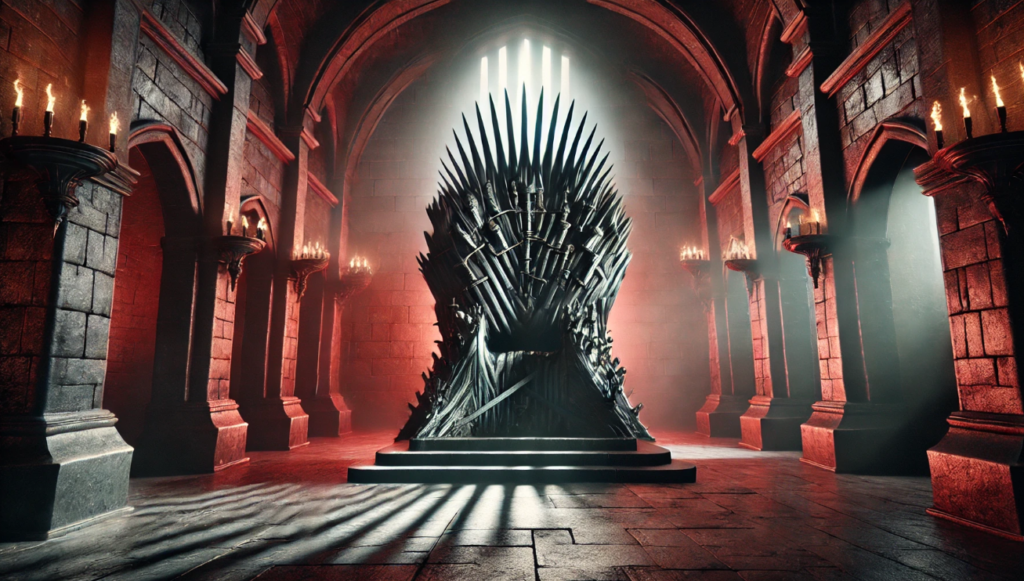
Imagine a seat of absolute power so dangerous that it literally cuts the person who dares to claim it. A jagged, twisted mass of blackened steel forged in dragonfire, towering over the throne room like a predatory beast, its countless half-melted swords ready to slice the unworthy. This is not a throne built for comfort or grandeur—it is a deliberate warning. As Aegon the Conqueror himself declared: “A king should never sit easy.”
The Iron Throne stands as the most iconic symbol in George R.R. Martin’s A Song of Ice and Fire saga and its HBO adaptation Game of Thrones. Far more than a fancy chair, it embodies the brutal realities of power, conquest, betrayal, and the inevitable cost of ruling. In this in-depth analysis, we explore every layer of Iron Throne symbolism—from its violent origins and menacing design to the way it judges (or seems to judge) those who sit upon it, and what its final fate reveals about the series’ core themes.
Whether you’re a longtime book reader, a show fan revisiting the finale, or someone searching for a deeper understanding of Westeros’ most infamous seat, this comprehensive guide goes beyond surface explanations to deliver the most complete breakdown available.
The Iron Throne as a Physical Symbol of Power
The Iron Throne is a massive and intimidating seat of power, designed to strike fear into the hearts of those who gaze upon it. Constructed from the melted down swords of vanquished enemies, it is a formidable and foreboding sight. The jagged edges of the swords create a sharp and dangerous appearance, serving as a constant reminder of the violence and conflict that has shaped the ruling of the Seven Kingdoms. The physical aspects of the Iron Throne, including its towering height and imposing size, convey a sense of the immense challenges and dangers that come with ruling. Its sharp, angular design reflects the harsh realities of power and the unforgiving nature of leadership in Westeros.

The Iron Throne and Authority
The Iron Throne is a powerful symbol of political authority in the Seven Kingdoms, directly tied to being the ruler of the entire realm. Throughout history, sitting on the Iron Throne has signified supreme power and control over the Seven Kingdoms. Many past rulers have claimed the throne, using it to legitimize their reign and assert their authority. However, the throne has also been a symbol of instability, as it has often been the target of ambitious individuals seeking to overthrow the current ruler and claim the throne for themselves. The connection between leadership and the throne goes beyond just holding power.

Ambition and the Pursuit of the Iron Throne
The pursuit of the Iron Throne is a central theme in Game of Thrones, with numerous characters seeing it as the ultimate goal and representation of their ambition to rule. Characters like Daenerys Targaryen and Robert Baratheon are driven by their desire to claim the throne and assert their power over the Seven Kingdoms. Their ambition often leads to moral compromise, with characters facing personal costs and making difficult decisions in their quest for power. Throughout the series, we see how ambition for the throne can have significant consequences. The rise and fall of key figures, betrayal, and war are all direct results of characters’ relentless pursuit of the throne.

The Iron Throne and the Corruption of Power
The allure of the Iron Throne has been a central theme in the Game of Thrones series, and it’s clear that it has a corrupting influence on those who seek to possess it. Rulers often become consumed by their desire for power, causing them to lose sight of their original goals and values. This ultimately leads to their downfall, as seen with characters such as King Robert Baratheon and King Joffrey, who were driven to madness, paranoia, and ruthlessness. Sitting on the Iron Throne takes a significant psychological toll on those who hold the position of power. The constant pressure and fear of betrayal can drive rulers to extreme measures, causing them to become increasingly isolated and paranoid.

The Iron Throne and the Cycle of Power
The constant conflict for the Throne in Westeros showcases the cyclical nature of power struggles, where the Iron Throne is constantly changing hands, demonstrating the impermanence of power. This dynamic creates a never-ending cycle of power struggles and betrayals, as characters vie for control of the kingdom. The fight for the throne often results in wars, shifting alliances, and bloodshed, as characters are willing to do anything to secure their claim to power. This relentless pursuit of the throne leads to widespread turmoil and destruction, as factions battle for dominance and control over the Seven Kingdoms. Despite being a symbol of supreme power, the Iron Throne is ultimately revealed to be a hollow symbol, as it does not guarantee peace or prosperity for the kingdom.

The Iron Throne in the Context of Modern Politics
The Iron Throne in Game of Thrones serves as a powerful metaphor for real-world political power struggles. Just like the Iron Throne, which represents the ultimate authority in Westeros, real-world political power often comes with corruption, conflict, and betrayal. The quest for power can lead to ruthless tactics and morally questionable decisions, mirroring the power struggles we see in the show. Ambition plays a significant role in leadership, both in the fictional world of Westeros and in our own. Political leaders often possess a psychological drive to seek power, sometimes at any cost. Just like the characters in Game of Thrones, real-world leaders may be driven by ambition, using manipulation and cunning to achieve their goals.

The Iron Throne in Westeros serves as a symbol of authority, ambition, and the cyclical nature of power. It represents the struggle for ultimate control and the lengths people will go to in order to attain it. The constant cycle of rulers rising and falling reflects the ever-changing landscape of power in the world of Westeros. Seeking the Iron Throne comes with significant personal and societal costs. The ruthless pursuit of power often leads to betrayal, violence, and the erosion of personal relationships. The consequences of seeking the Throne are often devastating, both for the individuals involved and for the society as a whole. The enduring relevance of the Iron Throne’s symbolism extends beyond the world of Westeros.

