
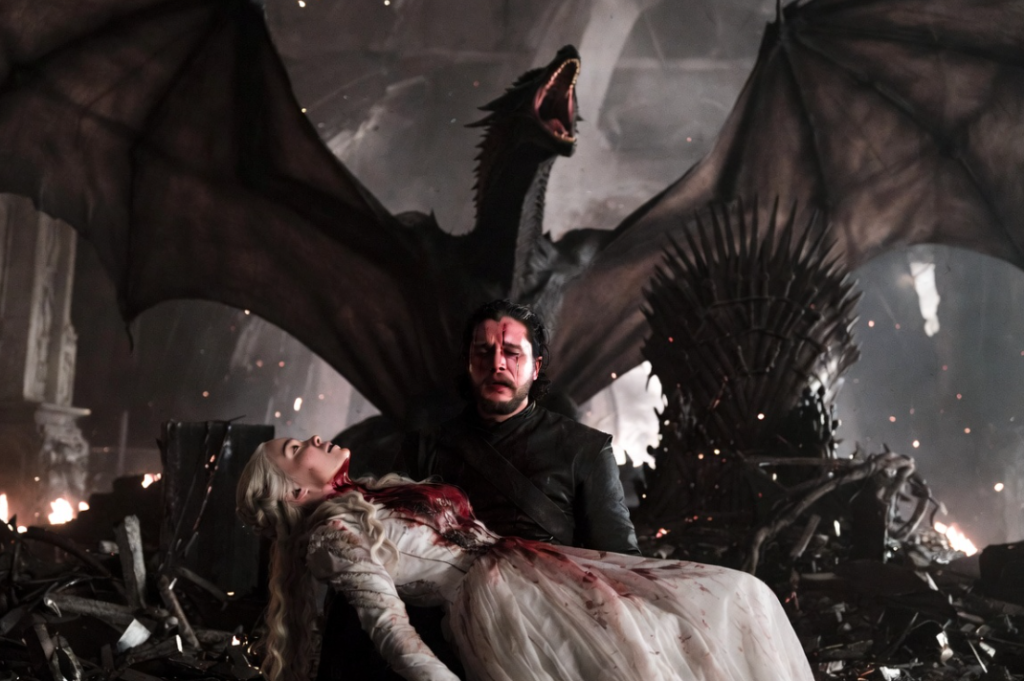
Yes, Daenerys Targaryen dies in the Game of Thrones TV series. In the Season 8 finale, “The Iron Throne,” Jon Snow stabs her in the heart inside the ruined throne room of the Red Keep, moments after she claims victory and gazes upon the Iron Throne she has pursued across continents.Gameofthrones.fandom
Her death marks one of the most shocking and divisive moments in modern television history. Millions of fans watched in disbelief as the Breaker of Chains, Mother of Dragons, and self-proclaimed rightful Queen of the Seven Kingdoms fell not to an enemy in battle, but to the man she loved — her own nephew, Aegon Targaryen, known as Jon Snow.
If you’ve searched “will Daenerys Targaryen die,” you’re likely seeking more than a simple yes or no. You want the full context: how her tragic arc built over eight seasons, the controversial decisions in the final season that led to her downfall, the exact details of her death scene, the thematic implications, and how her fate differs (or might differ) from George R.R. Martin’s unfinished book series. This comprehensive guide delivers exactly that — a definitive, spoiler-heavy breakdown designed to give longtime fans closure and help new viewers understand why her ending still sparks intense debate years later.
Major spoilers ahead for the entire Game of Thrones series, including the finale. Proceed only if you’re fully caught up or don’t mind knowing the ending.
Daenerys Targaryen’s Full Journey: From Fire and Blood to the Iron Throne
Daenerys Stormborn’s story begins in tragedy and exile. Born on Dragonstone during a storm as her family’s dynasty crumbled, she grows up fleeing assassins sent by Robert Baratheon. Her brother Viserys sells her into marriage with Khal Drogo in exchange for an army. What starts as a position of victimhood transforms rapidly.
In Essos, Daenerys evolves from a frightened young woman into a powerful leader. She survives Drogo’s death, walks into a funeral pyre, and emerges unburnt with three newborn dragons — the first in centuries. This “birth” of Drogon, Rhaegal, and Viserion cements her identity as the Mother of Dragons and signals her Targaryen heritage of “Fire and Blood.”
She liberates slave cities across Slaver’s Bay (later renamed the Bay of Dragons), earning the title Breaker of Chains. Her rule in Meereen tests her ideals of justice and mercy. She crucifies slave masters but later struggles with insurgency from the Sons of the Harpy. These experiences harden her: she learns that mercy can be perceived as weakness, and power requires difficult choices.
Key traits that define her early arc include:
- Unyielding sense of destiny as the rightful heir.
- Deep compassion for the oppressed, rooted in her own suffering.
- Growing ruthlessness when faced with betrayal or resistance.
- Reliance on advisors like Ser Jorah Mormont, Missandei, and Tyrion Lannister, balanced against her own instincts.
By the time she sails to Westeros with her Unsullied army, Dothraki horde, and dragons, Daenerys has become a formidable conqueror. She forms a complex romantic and political alliance with Jon Snow, bends the knee (or convinces others to), and helps defeat the Army of the Dead in the Battle of Winterfell.
Yet cracks appear. She executes Randyll and Dickon Tarly by dragonfire after they refuse to bend the knee. She grows increasingly paranoid about potential threats to her claim, especially after learning Jon is the trueborn son of Rhaegar Targaryen and thus has a stronger claim to the throne.

Foreshadowing of the “Mad Queen” Turn
The show planted seeds of Daenerys’s potential for tyranny long before Season 8. Her father, Aerys II “the Mad King,” burned people alive for perceived slights. Daenerys repeatedly hears warnings about the dangers of Targaryen “madness,” often dismissed as propaganda.
Notable foreshadowing moments include:
- In Season 2’s House of the Undying vision, she sees a ruined, snow-covered Red Keep — interpreted by many as a sign she would rule over “ashes.”
- Her repeated threats to “burn cities to the ground” and use “Dracarys” on enemies.
- The crucifixion of Meereenese masters and the execution of Mossador.
- Her reaction to the Tarly executions, where she shows little remorse.
- Varys’s growing unease and eventual betrayal, sensing she might become another tyrant.
- Tyrion’s repeated counsel against impulsive violence, which she increasingly ignores.
These elements built a thematic throughline: power corrupts, trauma shapes decisions, and even well-intentioned liberators can become oppressors. Whether the execution in the final season felt earned remains hotly debated among fans.

The Controversial Season 8 Arc: How Daenerys Became the Mad Queen
Season 8 accelerates Daenerys’s descent. The deaths of Jorah Mormont (in the Battle of Winterfell) and Missandei (executed by Cersei) strip away her emotional anchors. Jon’s revelation as Aegon Targaryen creates romantic and political rejection — he cannot fully reciprocate her love or support her claim without undermining his own.
The breaking point arrives in “The Bells” (Season 8, Episode 5). After the Lannister forces surrender and the bells ring, Daenerys, mounted on Drogon, continues her assault. She burns King’s Landing indiscriminately, killing soldiers, civilians, women, and children alike. The episode portrays her as driven by grief, rage, and a belief that total destruction is necessary to “break the wheel” once and for all.
Critics argued the turn felt rushed due to the shortened final season. Defenders pointed to years of subtle hints about her capacity for ruthless violence when crossed. Showrunners David Benioff and D.B. Weiss maintained the arc aligned with George R.R. Martin’s broad vision, though the pacing suffered from limited episodes.
Emilia Clarke, who portrayed Daenerys for eight seasons, described reading the final scripts as shocking. She noted the character’s vulnerability in her dying moments — a return to the frightened girl from Season 1 beneath the hardened queen. Clarke has emphasized that Daenerys was consumed by trauma and pain rather than simple “madness,” a term she dislikes for its reductive nature.Syfy
Will Daenerys Targaryen Die? The Exact Fate Explained
Yes — Daenerys dies by Jon Snow’s hand in the series finale.
After the sack of King’s Landing, Tyrion Lannister (imprisoned for treason) convinces Jon that allowing Daenerys to rule would lead to endless conquest and tyranny. He flips Maester Aemon’s famous line: “Love is the death of duty” into “Sometimes duty is the death of love.”
Jon confronts Daenerys in the devastated throne room. She caresses the melted, twisted Iron Throne — the symbol she has chased her entire life. She speaks of building a better world and asks Jon to rule beside her. Jon expresses horror at the destruction she wrought.
In a moment of tragic intimacy, they kiss. Jon whispers, “You are my queen, now and always.” As she closes her eyes in apparent contentment, he drives a dagger into her heart. Daenerys gasps, blood trickling from her mouth and nose. She dies in Jon’s arms, her eyes wide with surprise and betrayal.Polygon
Drogon, her last surviving dragon, arrives. Sensing his mother’s death, he roars in grief but spares Jon. Instead, he unleashes fire on the Iron Throne, melting it into slag — symbolically destroying the object that fueled so much bloodshed. Drogon then gently lifts Daenerys’s body with his talons and flies away, her final resting place unknown.
Her death effectively ends the Targaryen bloodline’s claim on the throne (Jon, the last known Targaryen, chooses exile). Bran Stark is elected king, Sansa rules an independent North, and Jon returns to the Night’s Watch (and beyond the Wall).

Why Did Jon Snow Kill Daenerys? Motivations and Themes
Jon’s act stems from duty over love. He loves Daenerys but recognizes the pattern: she has shown willingness to burn entire cities to achieve her vision of a “better world.” Tyrion argues that her reign would mirror her father’s — or worse, given her dragons.
This choice echoes core Game of Thrones themes:
- Power corrupts absolutely, even those who start with noble intentions.
- Cycles of violence are hard to break; “breaking the wheel” may require becoming the wheel.
- Duty versus love — a recurring conflict for Jon, from his time with the Night’s Watch to his relationships.
- No character is truly safe; “Valar Morghulis” (all men must die) applies even to beloved protagonists.
The scene mirrors Shakespearean tragedy: a fatal kiss, betrayal born of love, and the fall of a once-great ruler. It also parallels Aerys II’s fate — killed to prevent further madness and destruction.
Daenerys in the Books vs. the Show: What George R.R. Martin Might Do Differently
As of the latest published books (A Dance with Dragons), Daenerys remains in Essos. She has conquered Meereen but faces ongoing rebellion. Her final chapter ends with her ill and wandering the Dothraki Sea after riding Drogon from the fighting pits. She hallucinates and reaffirms “Fire and Blood.”
Martin has confirmed he told the showrunners major ending points years ago, including Daenerys burning a major city and facing consequences. However, he has repeatedly stated the books will differ in details and execution. Book Daenerys appears more measured in some ways — a pacifist at heart in certain interpretations — though she also embraces increasingly harsh measures.
Popular theories for the books include a slower descent, different triggers for any destructive act (possibly involving the Iron Fleet or other factions), and potentially altered outcomes for Jon and Daenerys. Martin’s emphasis on moral ambiguity and the human cost of war suggests her arc could feel more earned with additional books’ worth of development.
Whether Jon still kills her remains unknown. Some fans hope for redemption or a different resolution; others expect a similarly tragic end, given Martin’s love for bittersweet conclusions.
Fan Reactions and the Legacy of Daenerys’s Death
Daenerys’s turn and death triggered massive backlash. A Change.org petition to remake Season 8 garnered over a million signatures. Fans accused the writing of being rushed, character-assassinating, or even misogynistic in how it handled a powerful female leader.
Emilia Clarke has spoken candidly about the emotional toll. She described feeling “flabbergasted” upon reading the scripts and later reflected that the ending highlighted Daenerys’s underlying vulnerability. She expressed a desire for more scenes exploring relationships with Missandei and Cersei to deepen the emotional groundwork.
Despite the controversy, Daenerys remains one of television’s most iconic characters. Her arc explores ambition, trauma, liberation, and the seductive danger of absolute power. House of the Dragon has revisited Targaryen history, adding layers to the family’s legacy of fire, blood, and madness.
Her death scene is now studied for its cinematography, acting, and thematic weight. It forces viewers to confront uncomfortable questions: Can a liberator become a tyrant? Is violence ever justified in pursuit of a greater good?
What Daenerys’s Fate Teaches Us About Game of Thrones
Daenerys’s story reinforces the series’ central messages:
- Good intentions do not guarantee good outcomes.
- Trauma and loss can warp even the most idealistic leaders.
- True heroism often lies in quiet duty rather than grand conquest.
- No one sits the Iron Throne unscathed — many who reach it find only ruin.
For rewatches, pay close attention to her interactions with advisors, her speeches about justice, and moments where mercy gives way to retribution. Episodes like “Fire and Blood,” “Breaker of Chains,” “The Dance of Dragons,” and the entire final season reward careful viewing.
Frequently Asked Questions (FAQs)
Did Daenerys have to die? Thematically, yes — her unchecked rule risked perpetuating the cycle of tyranny the show critiques. Narratively, it provided a decisive end to the Targaryen claim and allowed other characters’ arcs to resolve.
Was her turn to the “Mad Queen” properly foreshadowed? There were numerous hints across seasons, but many viewers felt Season 8’s pacing made the shift feel abrupt rather than inevitable.
What happened to Drogon after her death? He flew away with her body. His ultimate fate is left open-ended, though he is the last known living dragon.
Will Daenerys appear in future Game of Thrones spin-offs? Not in live-action as the same character, though flashbacks or visions remain possible. House of the Dragon explores earlier Targaryens.
How does her ending compare to other major deaths? Like Ned Stark’s beheading or Robb’s Red Wedding demise, it subverts expectations and reminds viewers that no one is safe. It carries more personal tragedy due to the intimate betrayal by Jon.
(Additional common questions can explore book differences, Emilia Clarke’s perspective, or symbolic meaning of the melted throne.)
Conclusion
Will Daenerys Targaryen die in Game of Thrones? Absolutely — in a heartbreaking, intimate moment that caps one of the most epic character journeys ever televised.
Her death is tragic, controversial, and thematically rich. From a scared exile to a dragon-riding conqueror who liberated slaves and nearly claimed the Iron Throne, Daenerys embodied hope, fire, and ultimately the corrupting influence of power. Jon’s act, though devastating, prevented potential greater atrocities and closed the circle on Targaryen rule.
Years later, fans still debate whether the ending did her justice or rushed a complex arc. What remains undeniable is her cultural impact. She challenged viewers to question leaders, examine their own biases, and recognize that even heroes can fall.
If Daenerys taught us anything, it’s that fire can warm — or consume. Her story continues to spark discussion, analysis, and rewatches. What are your thoughts on her fate? Did the foreshadowing convince you, or did Season 8 fall short? Share in the comments below, and explore our other Game of Thrones analyses for deeper dives into Jon Snow’s parentage, the best episodes ranked, and more.


