
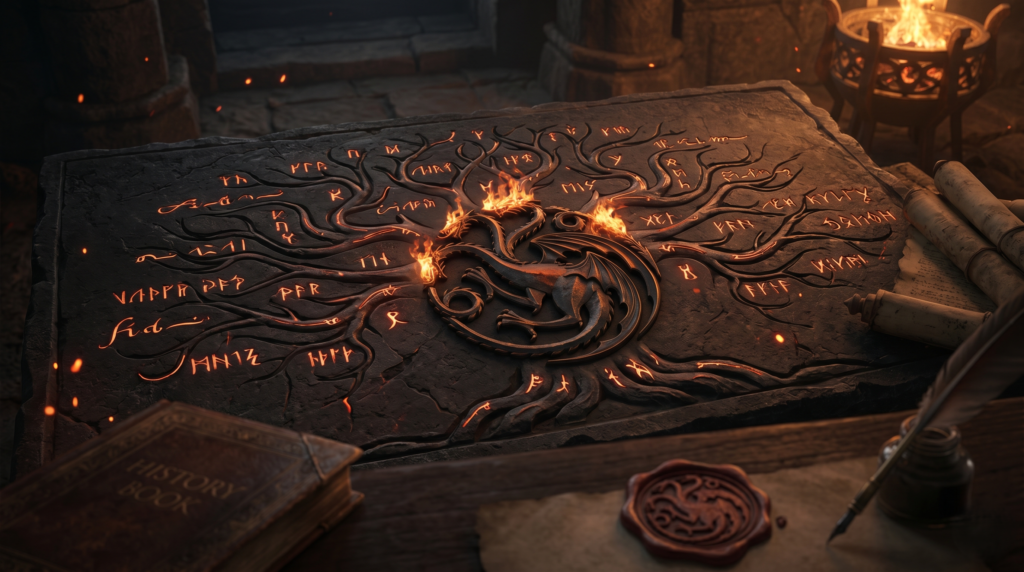
In Westeros, a name is never just a name—but for House Targaryen, a name is a declaration of fire and blood. When you look back at the sprawling, bloody history of George R.R. Martin’s A Song of Ice and Fire universe, the sheer volume of Targaryen names can feel utterly overwhelming. Let’s face it: navigating the Targaryen family tree is notoriously confusing. With eleven Aegons (if you count the uncrowned ones), countless Daerons, and an endless sea of silver-haired dragonriders, keeping their lineages straight is a dragon-sized headache for even the most dedicated Game of Thrones or House of the Dragon fans.
However, these names are far more than just a confusing jumble of vowels. They are a linguistic tether to a lost empire. This article won’t just list the monarchs who sat on the Iron Throne; we are going to decode the ancient High Valyrian linguistic rules, uncover the hidden meanings behind the recurring prefixes, and teach you how to craft your own lore-accurate names. Whether you are writing fanfiction, playing a tabletop RPG, or simply want to master Westerosi lore to impress your friends, this is your ultimate guide to the names of the dragonlords.
The Roots of Fire: How High Valyrian Shaped Targaryen Naming
To truly understand how a Targaryen gets their name, we have to look across the Narrow Sea to the smoking ruins of Old Valyria. The Targaryens were not native to Westeros; they were one of the forty powerful dragonlord families of the Valyrian Freehold. When they survived the Doom of Valyria and settled on the bleak island of Dragonstone, they brought their culture, their towering dragons, and their language with them.
The Linguistic Architecture of David J. Peterson
While George R.R. Martin created the foundational names in his novels, the High Valyrian language was largely a sketch in the books. It wasn’t until HBO’s Game of Thrones and later House of the Dragon that the language was fully realized. Acclaimed linguist David J. Peterson was brought in to build High Valyrian from the ground up, turning a few scattered phrases into a living, breathing language.
Peterson’s linguistic architecture reveals fascinating details about Targaryen naming conventions. Unlike English, which categorizes nouns by masculine, feminine, or neutral, High Valyrian utilizes a four-gender system: lunar, solar, aquatic, and terrestrial. This fluid, element-based system heavily influences how names sound and how suffixes are applied. High Valyrian is a language of poetry and command, built to sound dominant, ancient, and intrinsically linked to magic. When a Targaryen child is born, their name is carefully selected to evoke the ancient glory of their ancestors, utilizing specific phonetic structures that immediately identify them as the blood of the dragon.
The Dominance of the “Ae” Diphthong
If there is one defining characteristic of Targaryen names, it is the ubiquitous “ae” diphthong. Say these names aloud: Aegon, Rhaenyra, Daemon, Aemond, Baela. The “ae” sound (typically pronounced “ay” as in “day,” though pronunciations can vary slightly between book purists and show watchers) acts as a distinct phonetic signature.
In the context of the lore, this specific sound separates the blood of Old Valyria from the First Men and the Andals of Westeros. You will rarely, if ever, find a Stark, Lannister, or Baratheon with an “ae” prominently featured in their name. It is a linguistic marker of elitism, a constant reminder to the lords of Westeros that the rulers sitting on the Iron Throne are not of this continent. They are closer to gods than men, and their names are meant to sound fundamentally alien to the Common Tongue.

Decoding the Valyrian Formula: Prefixes and Suffixes
High Valyrian names often operate on a formulaic system, combining established prefixes with varying suffixes. By breaking down these linguistic roots, we can infer the “vibes,” personality traits, or historical weight placed upon a Targaryen child from the moment of their birth.
Common Targaryen Prefixes and Their Lore Associations
-
Dae- (The Anomalies & Dreamers): Names beginning with “Dae” often belong to Targaryens who break the mold, alter history, or possess an intense, almost dangerous level of Valyrian exceptionalism. Think of Daenys the Dreamer, whose prophetic visions saved the family from the Doom. Consider Daemon Targaryen, the Rogue Prince whose unpredictability sparked wars and shaped eras. And, of course, Daenerys Targaryen, the Mother of Dragons who brought magic back to the world. A “Dae” name carries a heavy destiny, often swinging like a pendulum between greatness and madness.
-
Rhae- (The Cherished and the Tragic): The “Rhae” prefix is generally associated with beloved, celebrated, yet often tragically fated family members. Rhaenys (the Conqueror’s sister-wife) was the beloved queen who perished mysteriously in Dorne. Rhaenyra Targaryen was the Realm’s Delight whose claim to the throne ignited the catastrophic Dance of the Dragons. Rhaegar Targaryen, the melancholic prince, was universally admired, but his actions triggered Robert’s Rebellion. To be named with a “Rhae” is to be adored, but rarely does it guarantee a peaceful end.
-
Vis- (The Administrators and Rulers): Rooted in names like Visenya and Viserys, this prefix often aligns with Targaryens who are defined by their relationship to power, duty, and governance. Visenya was the pragmatic, stern warrior-queen who wielded Dark Sister. The various Kings named Viserys were often peacekeepers or administrators, deeply concerned with the continuation of the line and the stability of the realm.
-
Bae- and Mae-: These prefixes are slightly less common but equally potent in the lore. Baelor the Blessed was a religious zealot king, while Maegor the Cruel is remembered as the most monstrous tyrant to ever sit the Iron Throne.
Common Suffixes (And How They Dictate Gender)
While Peterson’s High Valyrian has complex gender rules, the Westerosi application of Targaryen names over three centuries shows a clear pattern in how suffixes designate a character’s gender in the Common Tongue.
-
Masculine Endings: Male names predominantly end in -on, -or, -ar, or -mon.
-
Examples: Aegon, Maegor, Valarr, Daemon. These endings give the names a hard, authoritative stop, projecting strength, finality, and dominance.
-
-
Feminine Endings: Female names frequently end in -a, -ya, or -ella.
-
Examples: Rhaena, Visenya, Rhaella, Helaena. These suffixes provide a softer, more melodic conclusion to the harsh Valyrian prefixes, though the women bearing them were often just as fierce and unyielding as their male counterparts.
-
-
Gender-Neutral/Fluid Endings: The suffix -ys acts as a fascinating linguistic middle ground, appearing prominently in both male and female names.
-
Male: Aenys, Aerys, Viserys.
-
Female: Daenerys, Rhaenys.
-
By understanding these prefixes and suffixes, the seemingly infinite list of Targaryen kings, queens, and princes begins to look less like a random assortment of vowels and more like a carefully constructed, deeply meaningful family tapestry.
The Aegon Conundrum: Why Do Targaryens Keep Reusing Names?
If you have ever stared at the Targaryen family tree in frustration, you have likely encountered the “Aegon Conundrum.” Throughout Westerosi history, there have been five crowned kings named Aegon, alongside several uncrowned princes (including the famed Aegon the Uncrowned, Aegon son of Baelon, and even Jon Snow, whose trueborn name in the television canon was revealed to be Aegon). Why does this family insist on recycling the same moniker to the point of absolute confusion?
The Prince That Was Promised
The answer lies in a heavily guarded family secret, brought to the forefront in HBO’s House of the Dragon: Aegon the Conqueror’s dream. Aegon did not conquer the Seven Kingdoms merely for ambition; he did so because of a prophetic vision—the Song of Ice and Fire. He foresaw a devastating winter descending from the far North, bringing a darkness that could destroy the world of the living. To survive it, a Targaryen had to be seated on the Iron Throne to unite the realm.
Because the Conqueror believed that a Targaryen king would be the savior of humanity (The Prince That Was Promised), subsequent generations continually named their heirs “Aegon.” It was not just an homage; it was a superstitious, desperate attempt to ensure that their child would be the prophesied hero destined to lead the living against the White Walkers.
Honoring Ancestors vs. Tempting Fate
Naming a child in House Targaryen is a heavy political strategy. Bestowing a famous name upon a newborn is meant to evoke the golden ages of the dynasty, but it places unimaginable pressure on the child. A prince named Jaehaerys is expected to be wise, diplomatic, and long-ruling, mirroring the Old King, Jaehaerys the Conciliator.
However, this constant repetition has created a staggering data set of reused names. Here is a quick look at the most heavily recycled names in Targaryen history:
-
Aegon: Used 11 times across kings, princes, and bastards.
-
Daeron: Used 6 times, often associated with military prowess or youthful tragedy.
-
Aemon: Used 5 times, famously the name of the Dragonknight and the beloved Maester of the Night’s Watch.
-
Jaehaerys / Viserys / Daenerys: Frequently utilized in attempts to recapture lost glory or political stability.
The Hierarchy of Names: From Conquerors to Pariahs
Within the annals of A Song of Ice and Fire lore, a Targaryen’s name is intrinsically tied to their legacy. Over three hundred years of rule, clear hierarchies emerged regarding which names were favored and which were practically outlawed.
The Names of True Kings
Certain names carry inherent respect and authority across the Seven Kingdoms. Daeron (Daeron II the Good) is associated with the peaceful integration of Dorne into the realm and a flourishing of arts and learning. Jaehaerys signals peace, infrastructure, and diplomacy. When a child was given one of these names, the realm breathed a sigh of relief, assuming the boy was groomed to be a steady, reliable monarch.
The Cursed and Avoided Names
Conversely, some names were effectively cursed due to the atrocities committed by their original bearers. You will struggle to find a second Maegor on the family tree. Maegor the Cruel usurped the throne, executed his own family members, and tortured builders to death beneath the Red Keep. The name became synonymous with tyranny and was entirely abandoned.
Similarly, Aerion (specifically Aerion Brightflame, who madly drank wildfire believing it would turn him into a dragon) and Aerys (the Mad King who nearly burned King’s Landing to the ground) are names permanently stained by mental instability and ruin. To name a child Aerys after Robert’s Rebellion would be an act of political suicide.
The Epithet of “The Dragon”
Beyond their given names, the ultimate honor for a Targaryen is to be granted the epithet “The Dragon.” When a Targaryen is referred to simply as The Dragon (e.g., “The Dragon has three heads” or Rhaegar being called “The Last Dragon”), it signifies that they possess the ideal, terrifying, and awe-inspiring traits of Old Valyria. It is a callback to Aegon the Conqueror himself, serving as the ultimate validation of their bloodline.

Beyond the Humans: The Naming of Dragons
You cannot discuss Targaryen names without addressing the majestic, terrifying beasts that secured their dynasty. The naming of dragons provides a fascinating parallel to the cultural evolution of the Targaryen family themselves.
Gods of the Valyrian Freehold
When Aegon, Visenya, and Rhaenys conquered Westeros, they rode three massive dragons: Balerion, Meraxes, and Vhagar. These names were not arbitrary; they were the names of the ancient, forgotten gods of the Valyrian Freehold. By naming their mounts after deities, the early Targaryens established their dragons as divine, unstoppable forces of nature. Later dragons like Syrax and Caraxes maintained this harsh, sharp Valyrian phonetic style, utilizing the “x” sound to mimic the snapping of jaws and the hissing of flames.
The Shift to the Common Tongue
As the generations passed and the Targaryens assimilated deeper into Westerosi culture, their naming conventions for dragons drastically shifted. The children of the Dance of the Dragons era largely abandoned ancient Valyrian deities in favor of descriptive names in the Common Tongue. We see dragons named Sunfyre, Moondancer, Seasmoke, and Dreamfyre. This shift linguistically illustrates the family’s gradual loss of their pure Valyrian roots and their transformation into a natively Westerosi dynasty.
The “Build-Your-Own” Valyrian Name Guide
Are you looking to create your own lore-accurate Targaryen names for an RPG campaign, a fanfiction original character (OC), or a gaming avatar? Fulfilling the true search intent of our guide means giving you the tools to forge your own Valyrian identity.
The Targaryen Name Mix-and-Match Table
By combining a traditional prefix, a transitional middle sound, and a standard suffix, you can generate hundreds of unique names that sound like they were pulled straight from George R.R. Martin’s notes.
| Prefix (The Root) | Middle Sound (The Bridge) | Suffix (The Ending) | Resulting Name Examples |
| Ae- (Bloodline) | -la- / -li- | -rys (Fluid/Neutral) | Aelarys, Maelion |
| Dae- (Destiny) | -ne- / -na- | -on (Masculine) | Daenon, Rhaenar |
| Rhae- (Tragedy/Love) | -mo- / -ma- | -ra (Feminine) | Rhaemora, Baelor |
| Vis- (Duty) | -ge- / -go- | -or (Masculine) | Visegor, Valeron |
| Bae- / Mae- | -ry- / -ri- | -ella / -a (Feminine) | Maerya, Baenella |
3 Rules for Creating Lore-Accurate Original Characters (OCs)
-
Don’t Overuse the “Y”: While “y” is common in High Valyrian (Daenerys, Aenys), inserting it everywhere (e.g., Daeynyrys) makes the name look unpronounceable and breaks the linguistic flow established by David J. Peterson.
-
Match the Name to the Destiny: If your character is a rogue, rebellious warrior, use a harsh prefix and suffix like Dae- and -or (Daemor). If they are a gentle, beloved princess, use softer sounds like Rhae- and -ella (Rhaenella).
-
Keep Syllables Flowing: Targaryen names are rarely more than three syllables. Keep it punchy and melodic.

Frequently Asked Questions (FAQ) About Targaryen Names
What does the name Daenerys mean?
Within the official High Valyrian dictionary created by David J. Peterson, there is no direct English translation for “Daenerys.” It is a proper noun. However, breaking down the linguistic vibes, the Dae- prefix implies greatness or anomaly, while the -nerys ending shares phonetic space with Valyrian words for leadership and magic.
Are there non-Targaryens with Valyrian names?
Yes! Other families descended from Old Valyria, such as House Velaryon and House Celtigar, use similar naming conventions. Characters like Corlys Velaryon, Laenor, and Laena feature the distinct phonetic flow of High Valyrian, though they often substitute the “Ae” for slightly different diphthongs to distinguish themselves from the royal line.
Why is Jon Snow’s real name Aegon in the show?
In the television series, Bran Stark reveals Jon Snow’s trueborn name is Aegon Targaryen. This sparked controversy, as Jon’s half-brother (who was murdered by the Mountain) was already named Aegon. Showrunners likely chose Aegon to emphasize Jon’s claim to the Iron Throne and his connection to the “Prince That Was Promised” prophecy. (Book fans are still eagerly awaiting George R.R. Martin’s The Winds of Winter to see if his book name will differ—perhaps Aemon or Jaehaerys).
What does “Dracarys” actually mean?
Many casual fans mistake “Dracarys” for a dragon’s name. In High Valyrian, Dracarys simply translates to “Dragonfire.” Daenerys uses it as a training command, telling her dragons exactly when to unleash their flames.
Conclusion: The Echoes of Valyria
The history of House Targaryen is written in fire, blood, and ink. From the towering spires of the Red Keep to the ash-covered grounds of Dragonstone, the Targaryen names echo with the ghosts of Old Valyria. Understanding the linguistics behind Aegon, Rhaenyra, and Daenerys elevates our appreciation of Westerosi lore, transforming a confusing family tree into a masterclass in world-building, destiny, and the heavy burden of power.
A name in this family is a prophecy, a political tool, and a warning to the rest of the world that the blood of the dragon still boils.
If you were a dragonrider of Old Valyria, soaring above the clouds on a beast of fire and shadow, what would your Targaryen name be? Use our mix-and-match table and let us know in the comments below!


